
General Questions
What is a bulkhead and why is it important?
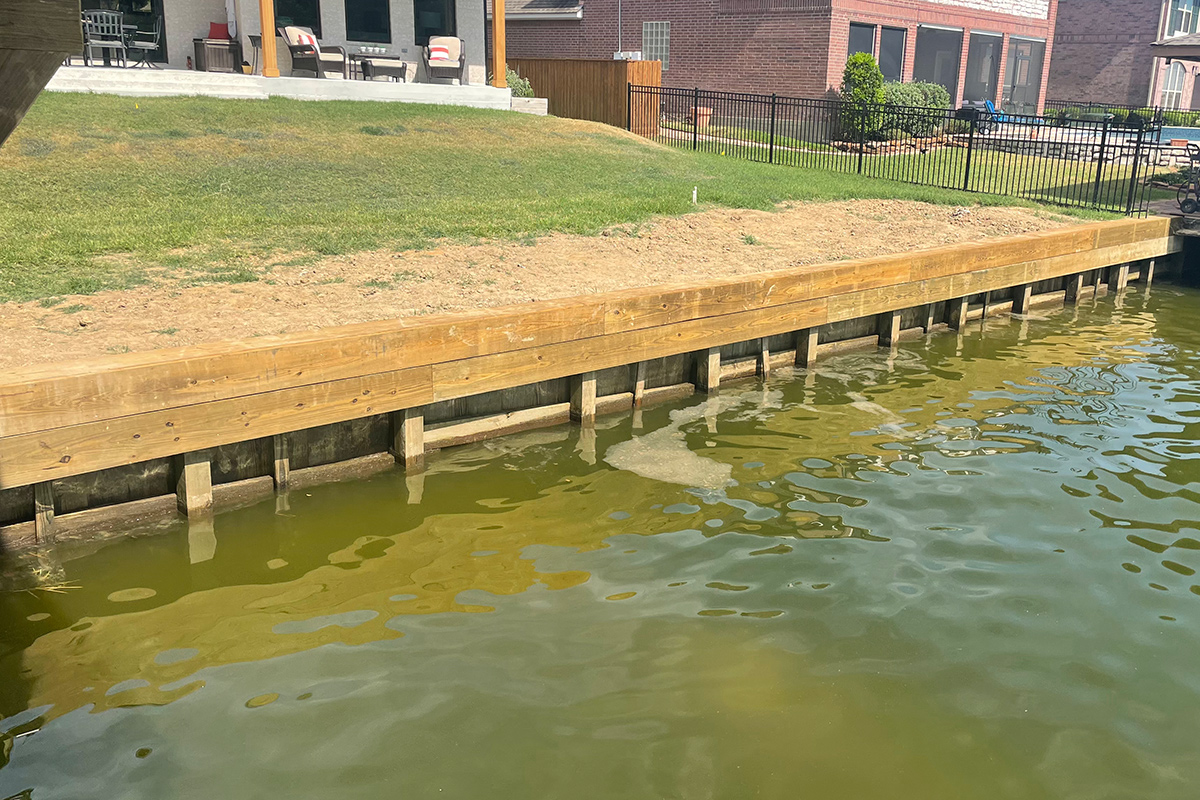
A bulkhead is a shoreline retaining structure designed to hold back soil and reduce erosion along the water’s edge. On lakes like Lake Conroe and Lake Livingston, bulkheads help protect waterfront lots from washout caused by waves, runoff, boat wakes, and normal water movement.
A well-built bulkhead can help preserve usable yard space, stabilize the shoreline, support nearby walkways or docks, and improve the appearance of a waterfront property. When a bulkhead begins to fail, soil can escape from behind the wall, creating sinkholes, leaning sections, uneven ground, and potential safety concerns.
How do I know if I need bulkhead repair?
Common signs that you may need bulkhead repair include:
- Leaning, bowing, or shifting wall sections
- Cracks, holes, or gaps in the bulkhead face
- Soil loss behind the wall
- Sinkholes or soft spots near the shoreline
- Rotting wood, rusted metal, or damaged panels
- Water flowing through areas where it should not
- Loose caps, tie rods, or anchors
- Separation near a dock, walkway, or neighboring bulkhead
On Lake Conroe and Lake Livingston, shoreline conditions can change with weather, water levels, and boat traffic. If you notice new movement or erosion, it is best to schedule an inspection before the damage spreads.
Can a damaged bulkhead be repaired, or does it always need replacement?
Not every damaged bulkhead needs full bulkhead replacement. In many cases, targeted repairs can extend the life of the structure. Repair may be appropriate if the bulkhead is mostly stable and the damage is limited to specific panels, caps, supports, or drainage issues.
However, replacement may be the better long-term solution if the wall is severely leaning, structurally compromised, heavily rotted, or failing across multiple sections. For properties on Lake Conroe or Lake Livingston, a professional assessment can help determine whether repair or replacement is the more cost-effective option.

Bulkhead Repair Process
Will bulkhead repair disturb my yard or dock?
Some disturbance may be necessary, especially if the repair involves excavation, backfilling, anchor work, or drainage improvements. The amount of disruption depends on the repair scope and access to the shoreline.
If you have landscaping, irrigation, patios, walkways, or a dock near the bulkhead, mention these details during the inspection. On Lake Conroe and Lake Livingston, many waterfront properties have customized outdoor spaces, so planning ahead can help reduce unnecessary disruption.
For lakefront properties on Lake Conroe and Lake Livingston, the inspection may also consider wave exposure, lot slope, access to the shoreline, and whether nearby bulkheads are affecting the area. After the inspection, you should receive a general recommendation for repair, replacement, or further evaluation.
What types of bulkhead repair are common?
The right repair depends on the bulkhead material and the type of damage. Common bulkhead repair solutions may include:
- Replacing damaged boards, panels, or sections
- Installing or repairing tiebacks and anchors
- Reinforcing leaning areas
- Repairing caps or walers
- Sealing gaps where soil is escaping
- Adding or improving drainage
- Backfilling lost soil behind the wall
- Stabilizing areas around docks or walkways
Because Lake Conroe and Lake Livingston properties can experience different shoreline conditions, repair methods should be tailored to the site rather than based on a one-size-fits-all approach.
What happens during a bulkhead inspection?
A bulkhead inspection typically includes a review of the visible wall, shoreline, drainage, soil conditions, and any related structures such as docks, steps, or walkways. The contractor may look for signs of movement, material failure, erosion behind the wall, and water pressure buildup.
How long does bulkhead repair take?
The timeline depends on the size of the repair, material availability, weather, water conditions, access, and whether permits or approvals are needed. Small repairs may take less time, while larger structural repairs or shoreline stabilization work can take longer.
For properties on Lake Conroe or Lake Livingston, scheduling can also be affected by lake conditions and contractor availability. A reputable contractor should explain the expected timeline before work begins and communicate if conditions change.
Bulkhead Replacement
When is bulkhead replacement recommended?
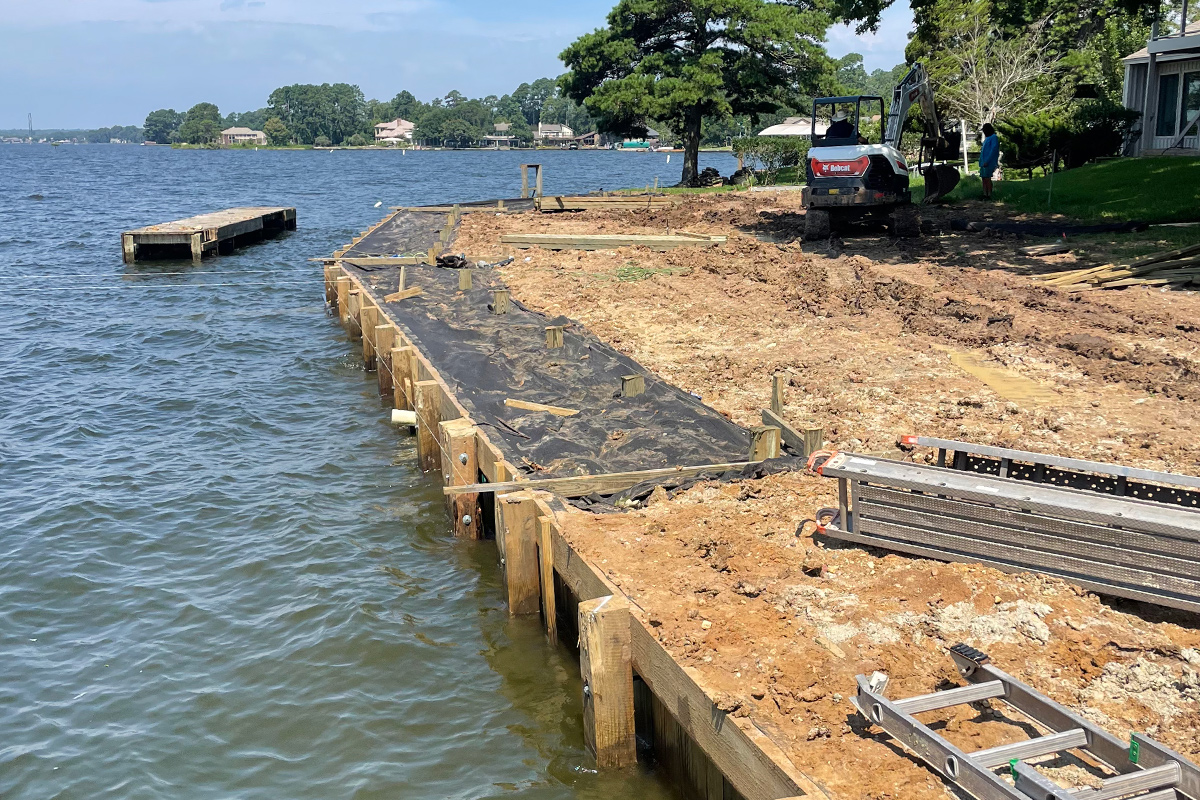
Bulkhead replacement may be recommended when the existing structure is no longer safe, stable, or economical to repair. Replacement is often considered when:
- The wall is leaning significantly
- Multiple sections are failing
- Materials are severely deteriorated
- Soil loss is widespread
- The bulkhead has reached the end of its service life
- Repeated repairs are no longer solving the problem
- The existing design is not appropriate for current shoreline conditions
For waterfront homes on Lake Conroe and Lake Livingston, replacement can also be an opportunity to upgrade materials, improve drainage, and create a stronger long-term shoreline solution.
What materials are used for bulkhead replacement?
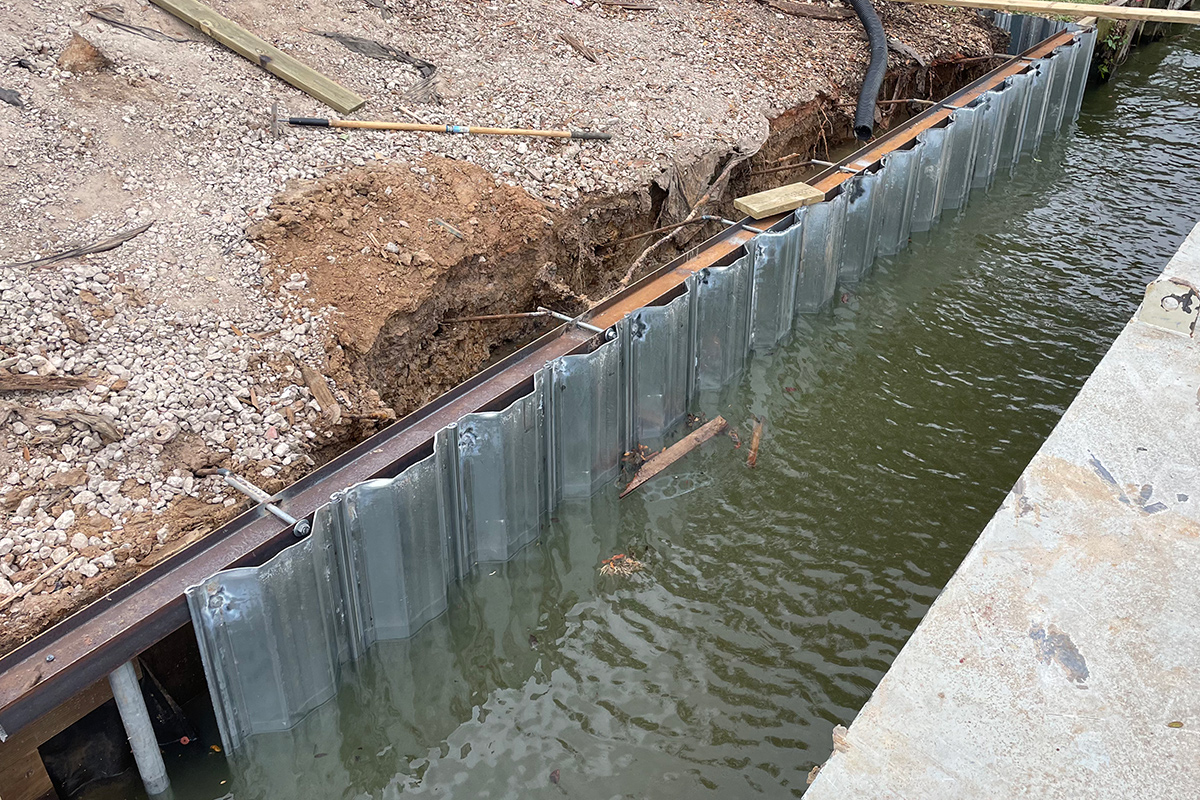
Bulkheads can be built with several materials, including treated wood, steel, concrete, or combinations of materials. Each option has advantages depending on budget, shoreline exposure, desired appearance, and expected longevity.
Many property owners on Lake Conroe and Lake Livingston compare materials based on durability, maintenance needs, and how well the bulkhead will match the surrounding waterfront. A contractor can recommend options based on your property, water exposure, and project goals.
Is steel better than wood for a bulkhead?
Steel bulkheads are popular because they resist rot and can offer a clean, consistent appearance. Wood bulkheads may be appealing for certain budgets or traditional shoreline designs, but they generally require more attention over time because wood is more vulnerable to moisture, insects, and decay.
The best choice for Lake Conroe or Lake Livingston depends on the site conditions, your budget, and how long you plan to own the property. Rather than choosing by material alone, consider the full design, installation quality, anchoring system, and drainage plan.
Can a new bulkhead be installed in the same location as the old one?
In some cases, a replacement bulkhead can be installed in the same general location, but this depends on shoreline conditions, existing wall failure, property boundaries, regulations, and water authority or HOA requirements. Sometimes adjustments are needed to improve performance or meet current guidelines.
Before bulkhead replacement begins on Lake Conroe or Lake Livingston, confirm whether approvals are required and make sure the project plan accounts for setbacks, access, neighboring properties, and shoreline protection rules.
Bulkhead Repair Cost
What affects bulkhead repair cost?
Bulkhead repair cost can vary widely because every shoreline is different. Common cost factors include:
- Length and height of the bulkhead
- Type and severity of damage
- Materials needed for repair
- Condition of anchors, caps, and supports
- Amount of soil loss behind the wall
- Drainage problems or water pressure issues
- Accessibility from land or water
- Equipment needs
- Permitting or approval requirements
- Whether nearby docks, decks, or landscaping must be protected
On Lake Conroe and Lake Livingston, access and shoreline exposure can make a major difference. A simple panel repair may be much different from a structural repair involving anchors, excavation, and backfill.
Why is it hard to give a bulkhead repair cost without an inspection?
A bulkhead may look like it has a small surface issue while deeper structural problems are hidden behind the wall. Soil loss, failed tiebacks, poor drainage, or rotted supports may not be obvious until the area is inspected closely.
For that reason, accurate bulkhead repair cost usually requires an on-site evaluation. This is especially true for Lake Conroe and Lake Livingston properties where shoreline slope, water exposure, and access can vary from one lot to the next.
Is bulkhead repair cheaper than bulkhead replacement?
In many cases, bulkhead repair costs less than full bulkhead replacement upfront. Repair can be a smart option when the structure is still sound and the damage is limited. However, repair is not always the most economical choice if the wall is near failure or needs repeated work.
If a bulkhead on Lake Conroe or Lake Livingston has major structural problems, investing in replacement may provide better long-term value than paying for multiple short-term fixes. A contractor can help compare immediate repair needs with long-term shoreline protection.
How can I reduce future bulkhead repair costs?
Preventive maintenance can help reduce future repair expenses. Property owners can protect their bulkhead by watching for early warning signs and addressing small issues before they become larger failures.
Helpful maintenance steps include:
- Checking for soil loss after heavy rain or high water events
- Keeping drainage paths clear
- Watching for leaning or shifting sections
- Avoiding excessive weight near the bulkhead edge
- Maintaining proper grading behind the wall
- Repairing small gaps before they expand
- Scheduling periodic inspections
For homes on Lake Conroe and Lake Livingston, routine observation is especially helpful because conditions can change after storms, seasonal water fluctuations, and periods of heavy lake activity.
Property and Shoreline Considerations
Do I need permits for bulkhead repair or replacement?
Permitting requirements depend on the location, scope of work, local rules, lake authority guidelines, and HOA requirements. Minor maintenance may have different requirements than structural repair or full bulkhead replacement.
Before starting work on Lake Conroe or Lake Livingston, ask your contractor what approvals may be needed. It is better to confirm requirements early than risk delays, rework, or compliance issues after construction begins.
Can drainage problems damage my bulkhead?
Yes. Poor drainage is one of the most common reasons bulkheads fail. When water builds up behind the wall, it creates pressure that can push the structure outward. Over time, that pressure may cause leaning, cracking, soil loss, or anchor failure.
A good bulkhead repair plan should address both the visible damage and the cause of the problem. For Lake Conroe and Lake Livingston properties, this may include evaluating yard slope, runoff patterns, downspouts, drains, and low areas where water collects.
What happens if I ignore a failing bulkhead?
Ignoring a failing bulkhead can lead to more serious erosion, larger sinkholes, loss of usable land, damage to nearby structures, and higher repair costs later. A small gap or minor lean can become a much larger issue if soil continues to wash out behind the wall.
On waterfront properties around Lake Conroe and Lake Livingston, timely repair helps protect your shoreline and can prevent damage from spreading to docks, patios, walkways, or neighboring bulkheads.
Can bulkhead repair improve the appearance of my waterfront?
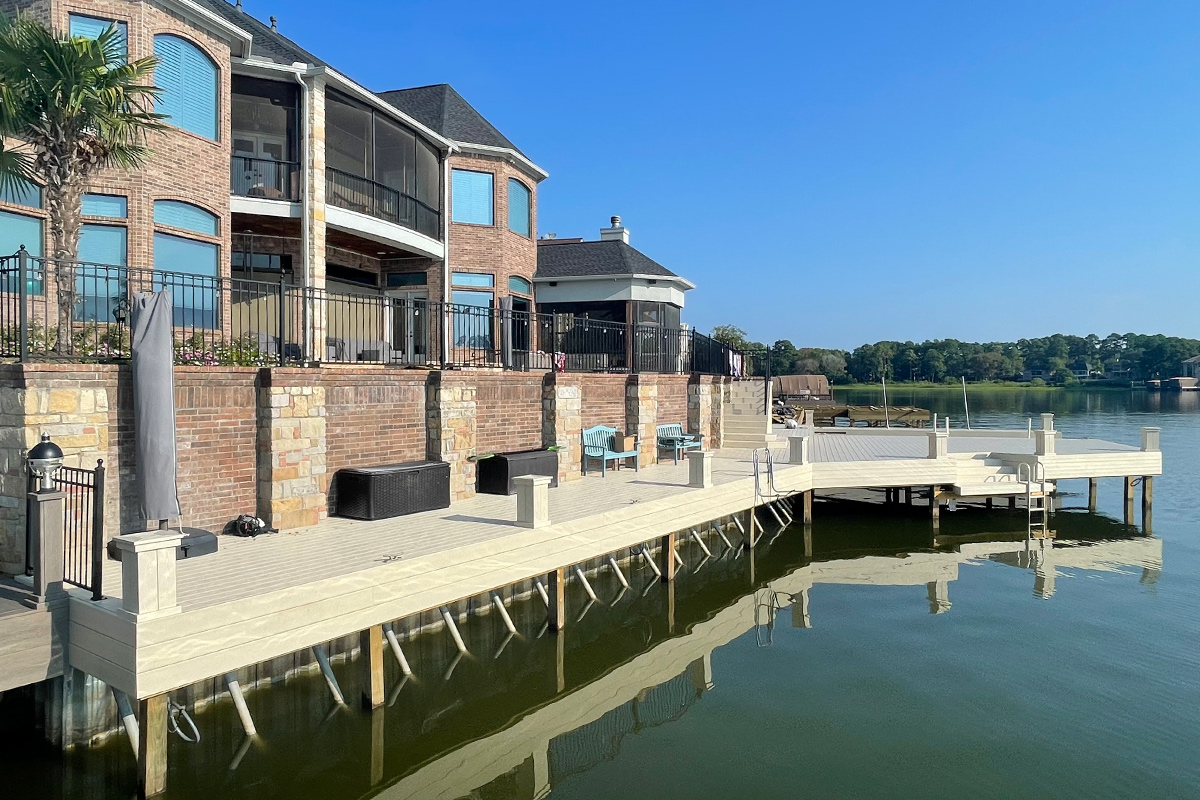
Yes. While the main purpose of bulkhead repair is structural protection, repairs can also improve curb appeal from the water. Replacing damaged caps, correcting uneven sections, closing gaps, and restoring backfill can make the shoreline look cleaner and better maintained.
For property owners on Lake Conroe and Lake Livingston, a well-maintained bulkhead can enhance the overall appearance of the waterfront and create a more usable outdoor area.
Choosing a Contractor
What should I look for in a bulkhead repair contractor?
Look for a contractor with experience in shoreline work, knowledge of lakefront conditions, and the ability to explain repair options clearly. The contractor should inspect the site, discuss materials, identify possible drainage concerns, and provide a written scope of work.
For Lake Conroe and Lake Livingston, it is helpful to choose someone familiar with local waterfront properties, common shoreline challenges, and approval processes. Ask about similar projects, expected timelines, and how the contractor handles unexpected conditions.
What questions should I ask before approving the work?
Before moving forward with bulkhead repair or bulkhead replacement, consider asking:
- What is causing the damage?
- Is repair enough, or is replacement recommended?
- What materials will be used?
- How will drainage be handled?
- What access is needed?
- Are permits or HOA approvals required?
- What is included in the estimate?
- How long is the work expected to take?
- How will my yard, dock, or landscaping be protected?
These questions are especially useful for Lake Conroe and Lake Livingston homeowners because no two waterfront lots are exactly the same.
How soon should I schedule an inspection?
If you see leaning, cracking, soil loss, sinkholes, or water passing through the bulkhead, schedule an inspection as soon as possible. Early evaluation can help you understand whether a simple repair is enough or whether a larger project is needed.
For waterfront property on Lake Conroe or Lake Livingston, prompt action can help protect your shoreline, preserve your outdoor space, and avoid more extensive damage.
Ready to Discuss Your Bulkhead
If your shoreline is showing signs of wear, do not wait for the problem to grow. Schedule a professional bulkhead inspection to review your options for bulkhead repair, bulkhead replacement, and an accurate bulkhead repair cost estimate for your Lake Conroe or Lake Livingston property.