If your boat has ever scraped bottom—or worse, gotten completely stuck—you already know how frustrating it is. What most waterfront property owners don’t realize is this: It’s not your boat. It’s your water depth. And in areas like Lake Conroe and Lake Livingston, it’s a problem that only gets worse over time.
Why Boats Get Stuck in Shallow Water
Shallow water doesn’t happen overnight. It builds up gradually due to:
- Sediment buildup from natural erosion
- Runoff and debris washing into your shoreline
- Fluctuating water levels exposing more bottom
- Lack of maintenance dredging
Over time, what used to be a safe depth for your boat becomes too shallow to navigate—especially for larger boats or deeper hulls.
That’s when you start noticing:
- Your boat struggling to get in or out
- Props hitting mud or sand
- Reduced access to your dock
The Real Problem: Your Waterfront Is Filling In
Most people assume the lake level is the issue.
But in reality, your specific shoreline is slowly filling in.
This is especially common with:
- Older properties
- Areas with heavy runoff
- Protected coves where sediment settles
If you’re on Lake Conroe or Lake Livingston, this is one of the most common issues we see.
The Solution: Dredging for Your Boat Dock
Dredging is the process of removing built-up sediment from the bottom of your waterfront to restore proper depth.
In simple terms:
We take out what doesn’t belong so your boat can move freely again.
With professional dredging for your boat dock, you can:
- Restore safe water depth
- Improve access year-round
- Prevent further buildup
- Protect your investment in your dock and boat
How to Know If You Need Dredging
You may need dredging if:
- Your boat gets stuck in shallow water
- You notice mud or sand buildup around your dock
- You’ve lost depth over the years
- You can’t use your lift or slip like you used to
- If any of these sound familiar, it’s time to take a closer look.
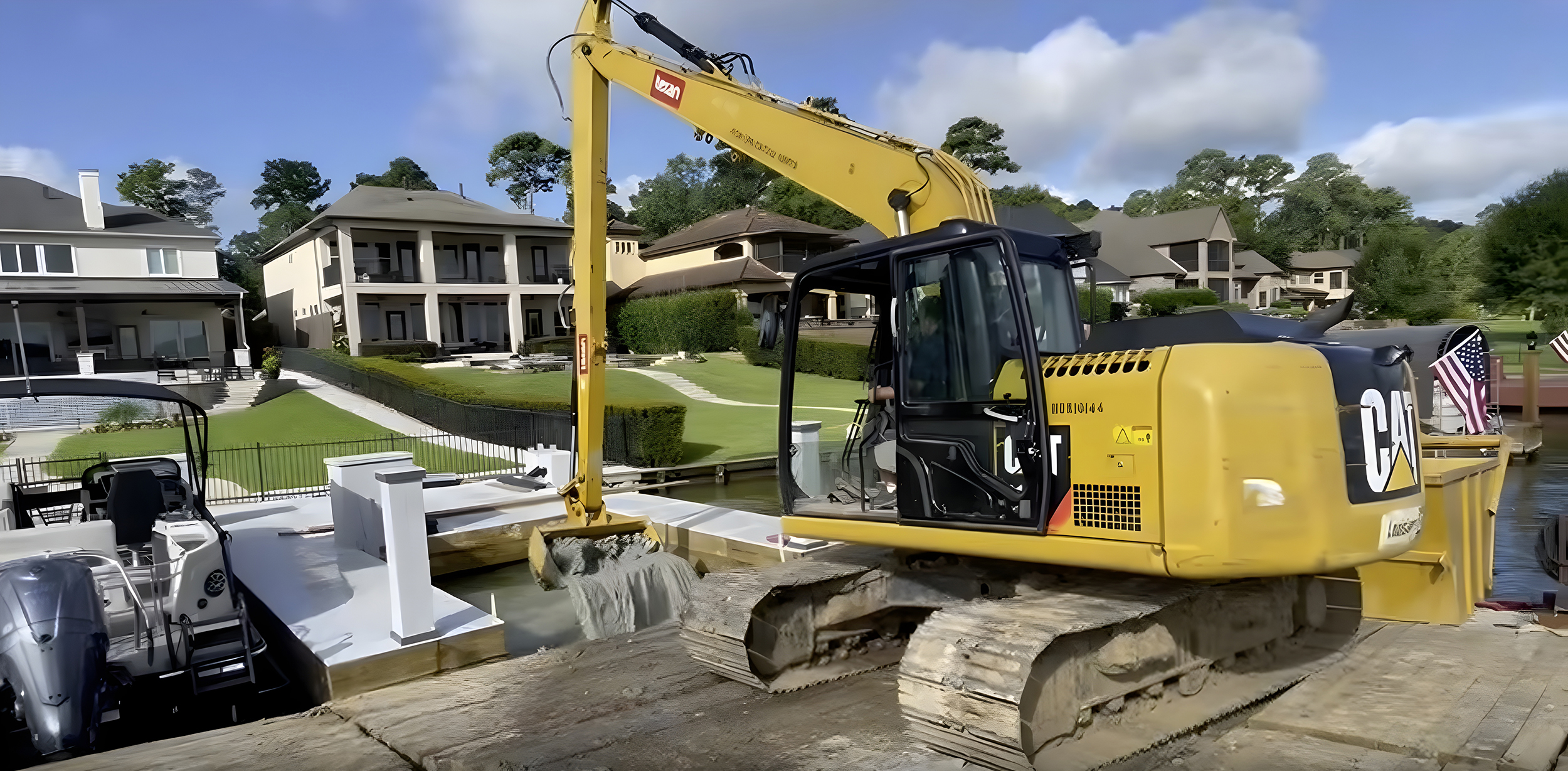
How to Deepen Your Waterfront Property
The only real way to permanently fix shallow water issues is to physically remove the buildup.
That’s where professional dredging comes in.
A proper dredging project will:
- Evaluate your current depth
- Identify problem areas
- Remove sediment efficiently
- Restore usable water depth
Done right, it doesn’t just fix the issue—it prevents it from coming back quickly.
What Does Lake Dredging Cost in Texas?
This is one of the most common questions we get.
The truth is: it depends on your property.
Cost is based on:
- How much material needs to be removed
- Access to your shoreline
- Equipment required
- Size of the area
But here’s the important part:
Ignoring the problem usually makes it more expensive later.
Stop Getting Stuck—Fix the Problem for Good
If your boat is getting stuck, scraping bottom, or becoming harder to use, it’s not something to ignore.
Dredging gives you back:
- Full access to your dock
- Peace of mind
- A waterfront that actually works
Get a Free Dredging Evaluation
Not sure how bad it is?
We offer free on-site evaluations to check your depth and let you know exactly what’s going on—no pressure.
If you’re on Lake Conroe or Lake Livingston and dealing with shallow water, now’s the time to fix it.
Call today and get your waterfront back.
Lake Conroe & Lake Livingston Dredging FAQ
How do I know if my property on Lake Conroe needs dredging?
If your boat is getting stuck in shallow water, your prop is hitting bottom, or you’ve noticed sediment building up around your dock, those are clear signs. Many Lake Conroe properties gradually lose depth over time due to runoff and natural sediment buildup.
Is dredging common on Lake Conroe?
Yes—very common. Lake Conroe is known for sediment accumulation, especially in coves and along shoreline properties. Over time, many homeowners need dredging for their boat dock to maintain proper water depth.
How much does dredging cost on Lake Conroe?
Lake dredging cost in Texas varies depending on:
- The amount of material to remove
- Access to your property
- Size of the dredging area
The best way to get an accurate number is with a free on-site evaluation.
How long does a dredging project take?
Most residential dredging projects on Lake Conroe can take anywhere from a few days to a couple of weeks, depending on the size and complexity of the job.
Can dredging improve my boat lift or dock performance?
Absolutely. Proper depth is critical for boat lifts and dock access. Dredging helps ensure your lift functions correctly and your boat can move freely in and out.
What’s the best time of year to dredge on Lake Conroe?
Dredging can be done year-round, but timing may depend on water levels and project conditions. Scheduling early can help avoid peak-season delays.
What happens to the material removed during dredging?
Sediment is typically relocated or properly managed based on the project setup and local guidelines. This is part of the planning process for every job.
How do I get started?
Start with a free dredging evaluation. We’ll assess your depth, identify problem areas, and give you a clear plan to restore your waterfront.